

Introduction: Why User Experience Laws Matter More Than Ever
In today’s rapidly evolving technological landscape, digital products are only as strong as the experience they offer their users. For ambitious startups racing from Seed to Series B, hyper-growth scale-ups navigating the demands of hundreds of employees, and established enterprises transforming legacy systems, a laser focus on user experience is not a luxury—it’s an absolute necessity. At Ify Stores, we believe that embedding the fundamental UX laws into product strategy and development lays the foundation for digital solutions that resonate with real users, deliver measurable results, and scale effortlessly.
In this installment of our "UX Law of the Week" series, we explore a timeless principle that underpins exceptional digital product design: the Law of Proximity. Harnessing this law during the design and engineering process—which we champion at every engagement—can be the difference between products that simply function and those that truly thrive.
Understanding the Law of Proximity
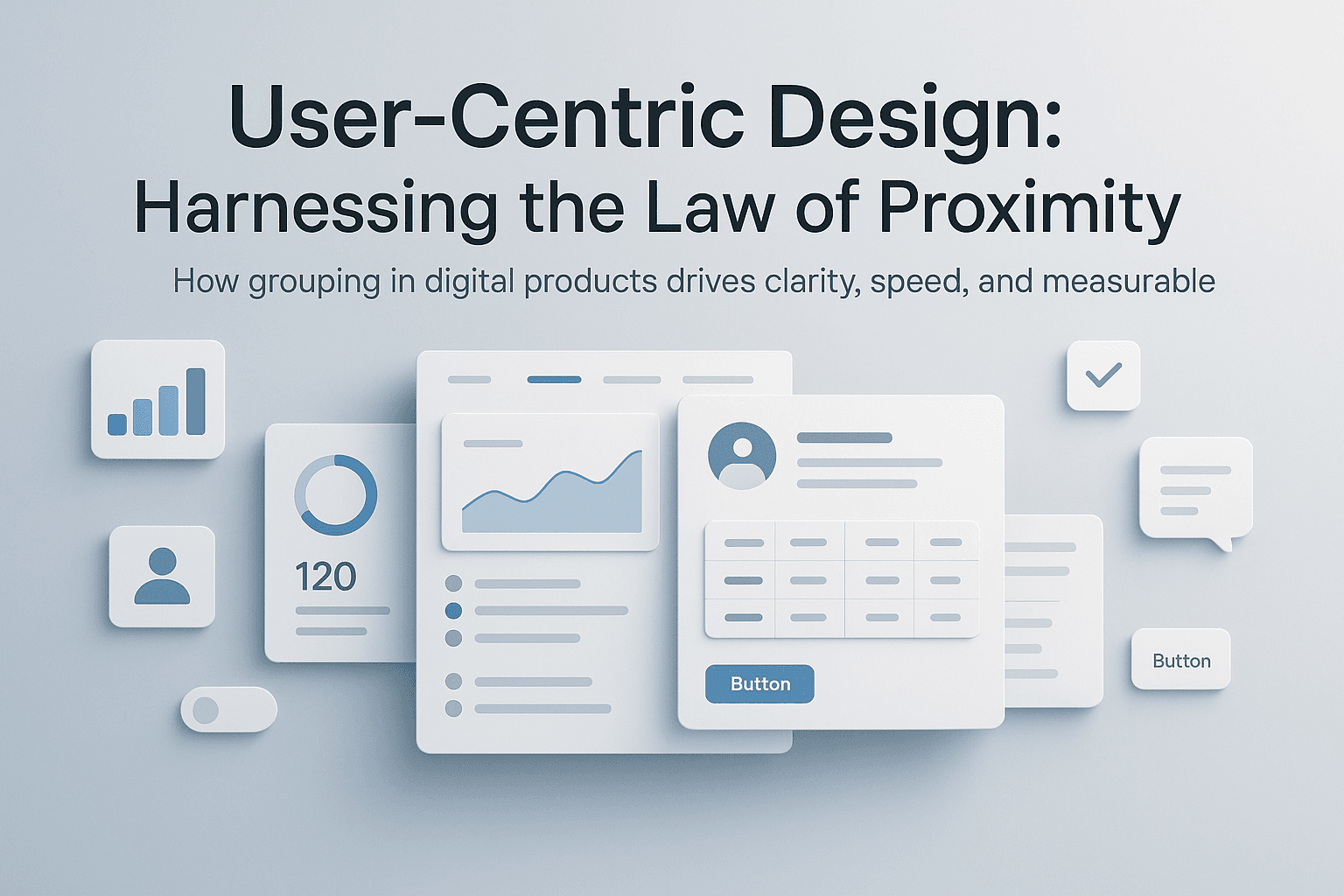
The Law of Proximity, rooted in Gestalt psychology, states that elements placed close together are perceived as related or grouped—while elements spaced farther apart appear distinct and separate. When applied to digital product design, this law shapes everything from navigation menus and dashboard layouts to mobile app settings and e-commerce catalogs.
Why is this relevant for tech innovators? Because every screen, feature, and workflow you create must align with how actual users perceive and process information. The easier it is for users to intuitively understand groupings and relationships, the less cognitive effort they expend—and the more likely they are to achieve their goals efficiently.
Discovery in Action: Proximity in the Ify Stores Design Process
At Ify Stores, every project begins with collaborative discovery workshops, in-depth requirements clarification, and hands-on user journey mapping. This isn’t just checkbox activity: it’s our way of ensuring that the Law of Proximity and other core UX principles guide product decisions from day one.
For a recent SaaS platform client, we observed early users struggling to differentiate settings for account management from those linked to financial reporting. By applying the Law of Proximity, we designed a clean, modular sidebar that visually grouped these functions. The result? A 40% decrease in support queries around account settings and a measurable uptick in user task completion rates. This simple yet powerful application of proximity ensured our information architecture worked with the brain—not against it.
Prototyping and Testing: Rapid Validation with Real Users
A design is only as good as its usability in the hands of your audience. That’s why we use interactive prototyping and rigorous UX testing to validate our assumptions. During these prototype phases, we observe how users interact with clustered content versus dispersed elements. Does the grouping align with user expectations? Does proximity highlight relationships or create accidental confusion?
Our agile, prototype-first process relies heavily on fast iteration. This approach not only saves significant development effort but also ensures that your MVP or v1.0 reflects genuine user needs—streamlining the journey from product ideation to market launch.
From Wireframes to Design Systems: Consistency at Scale
When your tech company grows—from a single-product startup to a feature-rich SaaS scale-up or enterprise platform—maintaining design consistency becomes critical. Here, the Law of Proximity comes into play as a blueprint for scalable design systems. Our team crafts reusable, standards-based components in Figma and Storybook, with clear grouping rules that engineers can implement confidently in React, Vue, or native mobile frameworks.
Each component—whether it’s a button cluster, card set, or form field group—follows the same proximity logic, ensuring that new features fit seamlessly with the existing product. This not only accelerates development velocity with proven UI patterns but also reinforces visual and functional coherence for every user, no matter the device or screen size.
The Business Impact: Why Proximity-Driven Design Amplifies Success
Adhering to the Law of Proximity isn’t just a matter of design elegance—it drives tangible business outcomes. Studies show that well-grouped interfaces reduce error rates, speed up onboarding, and boost conversion rates. For early-stage founders, a frictionless MVP wins trust from both beta users and investors. For scale-ups and mid-market SaaS companies, unified, intuitive workflows lower customer support costs and ramp up productivity.
At Ify Stores, our commitment to user-centric product design stretches from wireframing and prototyping through to full-stack engineering, code review, and ongoing performance tuning. We don’t just deliver visually stunning applications; we build digital products that are high-performing, maintainable, and beloved by the users who matter most.
Proximity in Mobile: Small Screens, Big Impact
Mobile app design presents unique proximity challenges. With limited screen space, crowding content can overwhelm, while excessive spacing can hinder discoverability. When we build native and cross-platform iOS and Android apps, we pay meticulous attention to grouping—ensuring that touch targets are logically clustered without sacrificing clarity or accessibility.
For one fintech client, reorganizing transaction categories with proximity-based grouping led to a 25% increase in app engagement and faster completion of critical core tasks, particularly on smaller devices. It’s proof that even subtle tweaks, guided by time-tested UX laws, make a measurable impact on key metrics.
Combining Proximity with Accessibility and Performance
UX excellence means every user benefits—regardless of ability. We ensure proximity-driven groupings remain evident not just visually but through semantic markup, ARIA landmarks, and clear content hierarchies for screen reader users. This alignment with accessibility best practices (like those specified in WCAG) also means your platform is legally compliant and future-ready.
What’s more, clean groupings aid performance. By structuring DOM and components efficiently, we streamline rendering and optimize for Core Web Vitals, boosting both real and perceived speed.
From Proximity to Product Roadmaps: How Ify Stores Helps You Scale
Digital products are never static. As your user base grows, your feature requests and business goals evolve. Our roadmap and versioning approach ensures that updates and new functionalities are continually guided by core UX laws, including proximity, so you never sacrifice usability for new capabilities.
Whether your team is launching a pivotal MVP, overhauling a mature product suite, or iterating a mission-critical enterprise platform, Ify Stores offers experienced, agile collaboration at every milestone. Our transparent, goal-driven methodology means you’re always equipped to make decisions rooted in user empathy and proven design science.
Call to Action: Ready for a Product That Users Love?
Unlocking the true value of your digital vision starts by embracing proven user experience laws—like the Law of Proximity—early and often. Let Ify Stores partner with you to create websites and mobile apps that are not just functional, but genuinely delightful and effective at scale.
Curious how user-centric design and engineering can elevate your next release? Reach out to our team for a discovery workshop and experience firsthand the Ify Stores approach to performance, compliance, and sustained growth.
Open Question
How are you currently leveraging user experience principles in your product design—and where do you see the biggest opportunities or challenges for your team?