
Introduction
In the ever-evolving landscape of the meat processing industry, sustainability has emerged as a pivotal focus. As professionals dedicated to delivering quality meat products, understanding and implementing sustainable practices is not just a trend—it's a responsibility. This article delves into the significance of sustainability in meat processing, offering insights and actionable strategies for industry professionals.
The Imperative for Sustainability in Meat Processing
The meat processing sector plays a crucial role in the global food supply chain. However, it also faces scrutiny due to its environmental impact, resource consumption, and waste generation. Embracing sustainability addresses these concerns and offers numerous benefits:
- Environmental Responsibility: Reducing greenhouse gas emissions, conserving water, and minimizing waste contribute to a healthier planet.
- Economic Efficiency: Sustainable practices often lead to cost savings through energy efficiency and waste reduction.
- Market Competitiveness: Consumers and businesses increasingly prefer products from environmentally responsible sources.
- Regulatory Compliance: Adhering to evolving environmental regulations ensures smooth operations and avoids potential penalties.
Key Sustainable Practices in Meat Processing
1. Energy Efficiency
Implementing energy-efficient technologies and practices can significantly reduce the carbon footprint of meat processing facilities. Strategies include:
- Upgrading Equipment: Investing in modern, energy-efficient machinery reduces energy consumption.
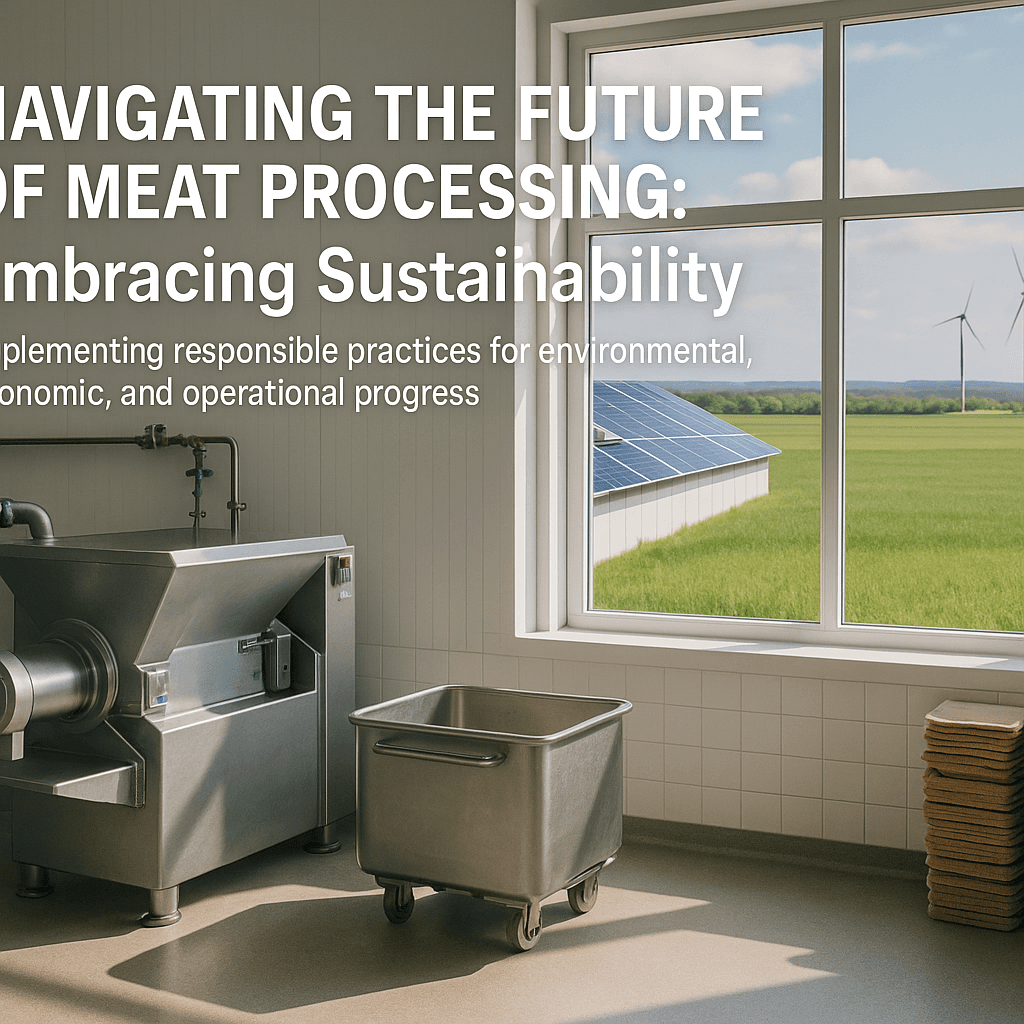
- Renewable Energy Sources: Utilizing solar or wind energy decreases reliance on fossil fuels.
- Process Optimization: Streamlining operations to minimize energy use without compromising productivity.
2. Water Conservation
Water is a vital resource in meat processing. Sustainable water management involves:
- Efficient Usage: Implementing water-saving technologies and practices.
- Recycling and Reuse: Treating and reusing water within the facility reduces overall consumption.
- Wastewater Treatment: Properly treating wastewater before discharge protects local ecosystems.
3. Waste Reduction and Management
Minimizing waste not only benefits the environment but also enhances operational efficiency:
- By-Product Utilization: Finding markets for by-products reduces waste and creates additional revenue streams.
- Composting: Organic waste can be composted and used as fertilizer.
- Packaging Innovations: Using biodegradable or recyclable packaging materials reduces environmental impact.
4. Sustainable Sourcing
Ensuring that raw materials come from sustainable sources is fundamental:
- Ethical Sourcing: Partnering with suppliers who adhere to sustainable and humane practices.
- Traceability: Implementing systems to trace the origin of meat products ensures transparency and accountability.
Case Studies: Leading by Example
Fridevi: Pioneering Sustainability in Patagonia
Fridevi, a prominent meat processing company in Patagonia, has integrated sustainability into its core operations. The company has established permanent links with international markets, including Europe, Japan, and China, showcasing its commitment to sustainable practices. Fridevi's modern feedlot, with a capacity of 7,000 animals, ensures a steady supply while adhering to environmental standards. Additionally, the company has developed logistics to carry out shipments efficiently, reducing the carbon footprint associated with transportation. (fridevi.com.ar)
Friesla: Empowering Local Meat Processing
Friesla offers USDA-compliant Modular Meat Processing Systems, enabling farmers and ranchers to process meat onsite. This approach reduces transportation emissions and supports local economies. Their systems encompass harvest, aging, cutting, packaging, and frozen storage, providing a comprehensive solution for sustainable meat processing. (friesla.com)
Implementing Sustainability: A Step-by-Step Guide
- Assessment: Evaluate current operations to identify areas for improvement.
- Goal Setting: Define clear, measurable sustainability objectives.
- Strategy Development: Create a roadmap outlining the steps to achieve these goals.
- Implementation: Execute the plan, ensuring staff are trained and resources are allocated.
- Monitoring and Evaluation: Regularly assess progress and make necessary adjustments.
Overcoming Challenges
Transitioning to sustainable practices may present challenges such as initial investment costs and resistance to change. Addressing these involves:
- Education and Training: Informing staff about the benefits and methods of sustainable practices.
- Financial Planning: Exploring grants, incentives, and financing options to offset initial costs.
- Incremental Changes: Implementing changes gradually to manage costs and adaptation.
The Future of Sustainable Meat Processing
The trajectory of the meat processing industry is undeniably leaning towards sustainability. Innovations in technology, evolving consumer preferences, and regulatory pressures will continue to drive this shift. Staying ahead requires a proactive approach, embracing change, and committing to continuous improvement.
Conclusion
Sustainability in meat processing is not merely an option—it's an imperative. By adopting sustainable practices, industry professionals can ensure long-term viability, meet consumer demands, and contribute positively to the environment. The journey towards sustainability is ongoing, and every step taken brings us closer to a more responsible and prosperous future.
Call to Action: We invite you to share your experiences and insights on implementing sustainable practices in meat processing. What challenges have you faced, and how have you overcome them? Your stories can inspire and guide others in the industry.